What the filter does
A tankless water heater has a small inlet screen or filter, usually where the cold water enters the unit. It stops sand, scale flakes and bits of pipe debris before they reach the heat exchanger. Without it, those particles could block narrow passages.
Because it catches debris, it clogs. A clogged filter restricts flow. Tankless units need a minimum flow to fire, so a restricted inlet can make the heater shut off or fail to light.
Signs the filter is clogged
Look for these symptoms before you call.
Weak hot water flow
Cold flow is fine, but hot comes out slowly.
Heater cycles on and off
Low flow drops below the unit’s minimum and it shuts down.
Error code about flow or ignition
Many brands show a code tied to water flow or temperature.
Hot water gets worse over weeks
Gradual buildup of debris is the usual story.
How to check and clean it
Check the manual for your model first. This is the usual sequence.
Shut off water and power
Close the isolation valves, turn off gas or power, and relieve pressure at a hot tap.
Remove and inspect
Unscrew the inlet filter, check for debris and rinse it under running water.
Reinstall and test
Put it back with its washer, open the valves slowly, purge air and test hot water at several taps.
Filter, descale or call a plumber
The right action depends on what you find.
| Finding | Action | Who |
|---|---|---|
| Debris on the screen | Rinse and reinstall | Homeowner |
| Torn or damaged screen | Replace the filter | Homeowner or plumber |
| Screen clean but flow weak | Descale the heat exchanger | Plumber, see water heater repair |
| Leak at the filter housing | Replace the washer or housing | Plumber |
Do not run a tankless unit without the filter in place.
How often to check
Check the filter at least once a year with your flush, and sooner if you notice any of the symptoms above. After plumbing work in the house, check it again. New pipe, a repaired main or a water shutoff can stir debris loose.
If the filter is always full, the debris source matters. It can be old galvanized pipe, a failing water heater anode in a tank upstream or work on the supply. A plumber can trace it.
Why it ties into the yearly flush
The filter protects the unit from debris. The flush protects it from scale. They are different tasks done at the same time. Use isolation valves and a descaling solution as the manual describes, and clean the filter after the flush. For more on service, see tankless water heater care.
Why debris shows up after plumbing work
A repair, a new fixture or a shutoff of the main can stir up debris that has been sitting quietly in the pipes. That material heads for the first screen it meets, and on many homes that is the tankless inlet filter.
If your hot water weakens a day or two after plumbing work, the filter is the first thing to check. It is a five minute task, and it often brings the heater back to normal without a service call.
A simple yearly maintenance list
Pair the filter check with the other upkeep a tankless unit needs.
- Clean the inlet filterRinse it and look for tears.
- Flush the heat exchangerUse the isolation valves and a descaling solution as the manual describes.
- Check the vent and condensate drainLook for blockage, discoloration or leaks.
- Test the temperature and flowRun hot water at several taps and note any change.
When the filter is not the culprit
If you clean the screen and the problem remains, the next suspects are scale on the heat exchanger and a failing flow sensor. Scale narrows the passages inside the unit and causes temperature swings. A flow sensor that reads wrong makes the heater think the flow is too low to fire.
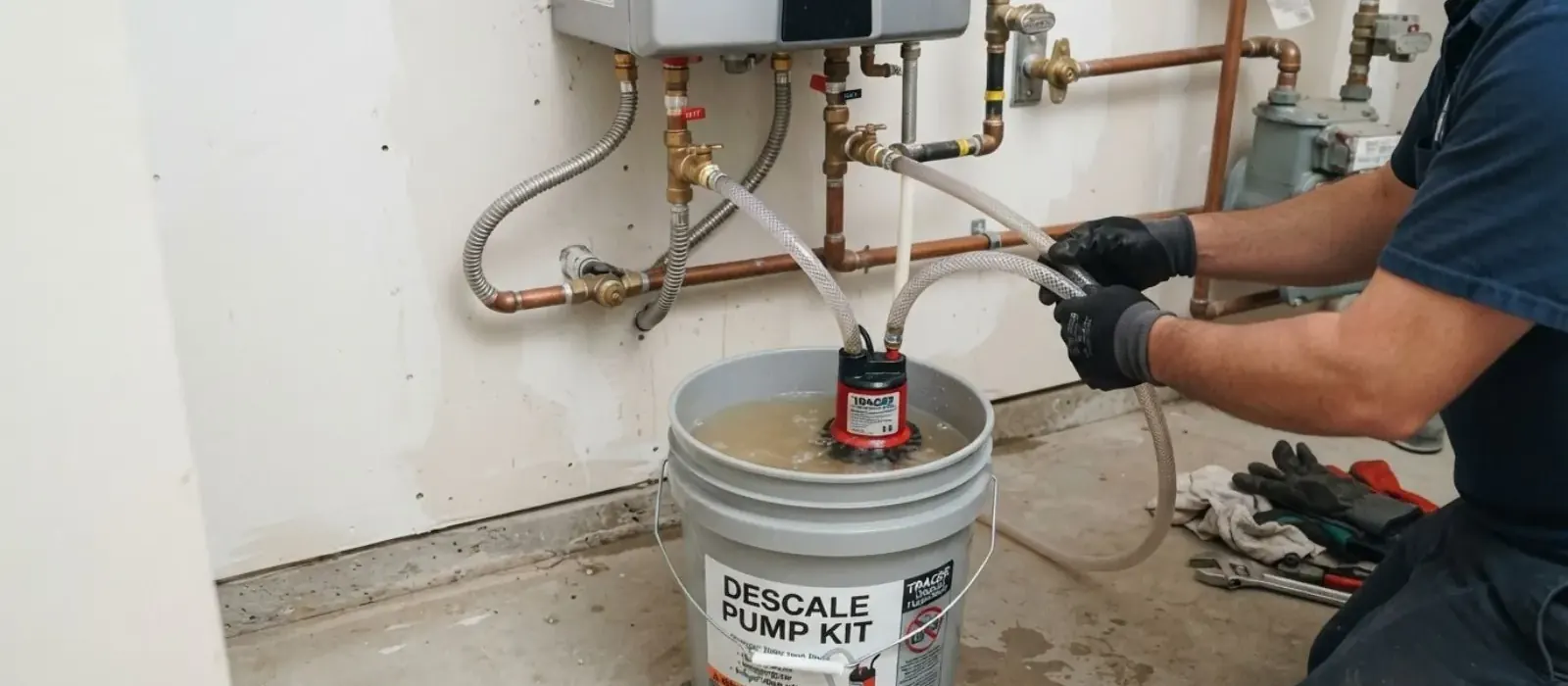
Both are service jobs. A descale uses a pump and solution through the isolation valves. A sensor replacement is a part swap. Neither is a reason to replace a unit that is otherwise sound, so ask for a diagnosis before accepting a replacement quote. Water heater repair visits cover this kind of work.
What to tell the plumber when you call
A few details speed up the diagnosis.
The brand and model
The label on the unit shows both.
The error code, if any
Codes point to the likely fault.
When it started
Right after plumbing work, or gradually?
Whether cold flow is normal
It separates a heater problem from a supply problem.
Following the manufacturer on filters and flushing
The manufacturer’s manual sets the filter location, the cleaning interval and the flush procedure for your model, and the warranty often depends on following it. Treat the manual as the authority, since its installation guidelines are written for your exact unit.
Turn off the power or gas and the water supply before opening any filter. Gas units should also be checked for odors, and a rotten egg smell means leave and call the gas utility.
Choosing a replacement filter
Replacement filters are specific to each brand and often to each model. A screen that looks the same can have a different mesh size or seal. Use the part number in the manual or on the old filter, and order from the manufacturer or a trusted supplier.
Keep one spare on hand. A filter is small and inexpensive, and having a spare turns a possible service call into a five minute swap. Store it in a clean bag so the screen stays free of dust and lint.
If you use a whole house sediment filter ahead of the heater, check that one too. A clogged upstream filter looks like a failing heater, and the fix is a cartridge change. Write the dates of both checks on a label near the heater so you remember them.
Keizer note: what is in your water
The City of Keizer draws its water from the Troutdale aquifer through 15 deep wells and publishes an annual water report. The city page does not state a hardness figure in the portion we reviewed, so test your tap or ask the city. Hardness changes how fast scale builds on a tankless exchanger.
If you live in Woodburn, the city’s report lists iron and manganese removal at its plants, and in Salem the supply comes from the North Santiam River. A filter that clogs fast is worth a look at your own pipes.
Tankless filter questions
Often yes. Close the valves, relieve pressure, remove the screen and rinse or replace it. If you are not comfortable, call a plumber.
The city page we reviewed does not give a hardness figure. Test your tap or ask the City of Keizer.
Check the filter first. If it is clean and flow is still weak, the exchanger likely needs descaling.
It can reduce debris reaching the unit. Install it ahead of the heater, and ask the manufacturer about warranty effects.
The screen seats in its housing with a washer, and water should not weep from the cap. If it leaks, check the washer and tighten gently.