When a clogged drain is an emergency
If sewage is coming up in a tub, shower or floor drain, treat it as an emergency. Our 24/7 line sends a plumber the same day when a crew is free, and nights and weekends are covered. While you wait, stop running water, keep the toilets unflushed and keep kids and pets out of the wet area.
A single slow sink is a daytime job. A backup that spreads from one fixture to the next means the blockage sits in the main line, and that is when waiting costs you a flooded floor.
- Stop all water use. Every flush or load of laundry adds water to a line that has nowhere to go.
- Skip the chemical cleaner. Caustic drain products sit in a stopped pipe and can burn skin and damage the pipe when we open it up.
- Move belongings off the floor. Lift rugs, boxes and electronics away from the lowest drain in the house.
- Note which fixtures are affected. Tell dispatch whether one drain or several are backing up. It tells the plumber where to start.
What drain cleaning means at your door
Drain cleaning is the removal of whatever is narrowing a pipe: grease, hair, soap scum, food waste, paper, wipes or tree roots. In Keizer, OR, most calls fall into three groups. A single fixture clogs, several fixtures slow down together, or the main line to the street stops.
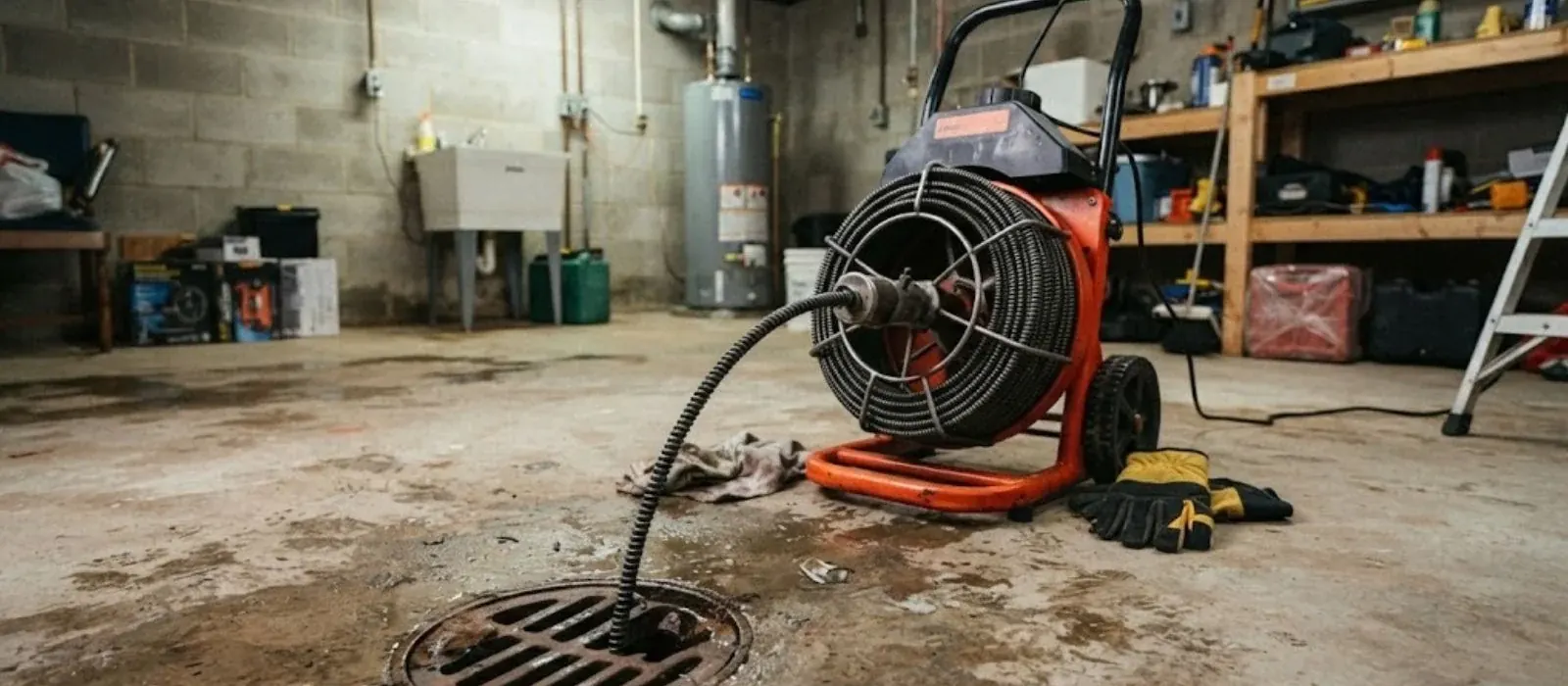
Which group you are in decides the tool. A hand auger or small cable machine clears a trap or a branch line. A larger cable machine reaches the main line. When the pipe is coated rather than blocked, hydro jetting scours the walls with high pressure water.
Signs the clog is deeper than the sink
These patterns point past the fixture and into the building drain. Mention any of them when you call.
Gurgling after a flush
Air pushed back through the traps means the main line is partly blocked downstream.
Two fixtures clog at once
A tub and a toilet that slow down together share a branch, so the blockage is beyond both.
Floor drain bubbles
The lowest drain in the home is the first place a stopped main line shows itself.
Repeat clogs every few weeks
A pipe that keeps clogging often has a rough joint, a belly or a root in it, and a camera look finds out which.
How a drain call runs
The visit is short and predictable. You hear the plan and the price before the machine comes out of the truck.
Find the clog
The plumber runs water, checks the cleanout and decides where to enter the line.
Clear it
Cable, auger or jetter goes in until water moves freely and the cutting head comes back clean.
Confirm flow
We run water from every fixture on that line to prove it drains, then explain what caused it.
Kitchen sink clogs: the most common call
Kitchen drains clog on grease and food solids. Grease runs liquid and then cools on the pipe wall, where it catches coffee grounds and rice and hardens into a plug. Scrape plates into the trash, wipe pans before washing and never pour cooking fat down the drain.
If a double sink drains one side and holds the other, the blockage usually sits at the tee past the shared trap. A garbage disposal that hums but leaves water standing is a different problem, covered under garbage disposal repair.
Snaking, jetting and when each one fits
Drain snaking uses a rotating cable with a cutting head. It pushes through a blockage and pulls the debris back out. It is the right first step for hair, paper and soft clogs, and it is quick.
A snake can leave a thin coat of grease on the pipe wall. When the same drain clogs again within a few weeks, hydro jetting is the better fix because it washes the full diameter clean. The trade-off is cost and setup time, so we match the tool to what the pipe needs.
A line that leaks rather than clogs is a different job. A wet spot along a drain run, a smell of sewer in a crawlspace or a patch of soft lawn points to a broken pipe. That is a repair, and a camera inspection confirms it before anyone digs.
Which tool for which clog
A quick guide to what gets used and why.
| Symptom | Likely cause | Usual fix |
|---|---|---|
| One sink slow | Hair or soap in the trap or branch | Hand auger or small cable |
| Kitchen sink full of water | Grease and food solids | Cable, then jetting if it returns |
| Tub and toilet slow together | Branch line blockage | Cable machine through the cleanout |
| Whole house gurgles | Main line partly blocked | Main line cable, camera and often jetting |
| Clogs return within weeks | Roots, coating or a damaged joint | Camera inspection, then jetting or repair |
This is a guide, not a quote. The plumber confirms the cause on site.
Keizer homes and the drains under them
Keizer grew fast. The city says development began in earnest in the 1950s and that orchards and berry fields turned into houses through the 1970s, so many drain lines here are 50 to 70 years old. Older cast iron and clay lines roughen with age, and roots find the joints.
That is why a repeat clog on a River Road North or Chemawa Road area home often deserves a camera look before a third snaking. The same goes for lots with mature trees near the sewer lateral. If your home sits in nearby Salem, the same approach applies.
What decides the price of drain cleaning
Prices vary because clogs vary. Here are the factors that move the number, so you know what is in the quote.
Code and manufacturer rules that apply to drain work
Drain work in Oregon falls under the Oregon Plumbing Specialty Code, which is the state’s adoption of the Uniform Plumbing Code (UPC). The code expects accessible cleanouts so a main line can be cleared without cutting into walls or floors. If your home has no cleanout near the main drain, adding one is a common recommendation.
Drain machines and cleaning products also come with manufacturer instructions, and those set the limits for cable size, speed and chemical use. If a line needs more than cleaning, such as a new cleanout or a pipe section, ask whether the work needs a permit from your local building office.
Drain cleaning questions from Keizer homeowners
Yes. The line is open 24 hours a day, every day, and a sewage backup is treated as urgent. Tell dispatch what is backing up and which fixtures are affected, and a plumber is sent as soon as a crew is free.
It is better not to. Chemical cleaners rarely clear a full blockage, and the liquid then sits in the pipe where it can harm skin and fittings. A plumber is safer and faster once it has been used.
Grease and food solids build up on the pipe wall until they narrow it. If a snake only helps for a few weeks, ask about jetting or a camera look for a belly or a damaged joint.
Yes. The plumber explains the cause, the tool and the price before the work begins. A clear price before work starts is part of every call.