When a hidden water leak is an emergency
Water that you can see spreading through a ceiling, a wall or a floor is an emergency. Our 24/7 line takes the call at any hour and sends a plumber as soon as a crew is free. Shut the main water valve first, since that stops the damage while you wait.
If the leak is near outlets, a panel or a light fixture, stay out of the wet area and switch the circuit off only if you can reach the breaker safely and dry.
- Shut the main valve. Turn the home shutoff clockwise until it stops. That isolates every pipe inside the house.
- Check the meter. With every tap off, a moving dial or a spinning low-flow triangle confirms the leak is real.
- Catch and photograph. Place a bucket, take photos and write down when you noticed it for insurance.
- Stay away from wet electrical. Do not touch outlets, cords or fixtures near the water.
What leak detection does
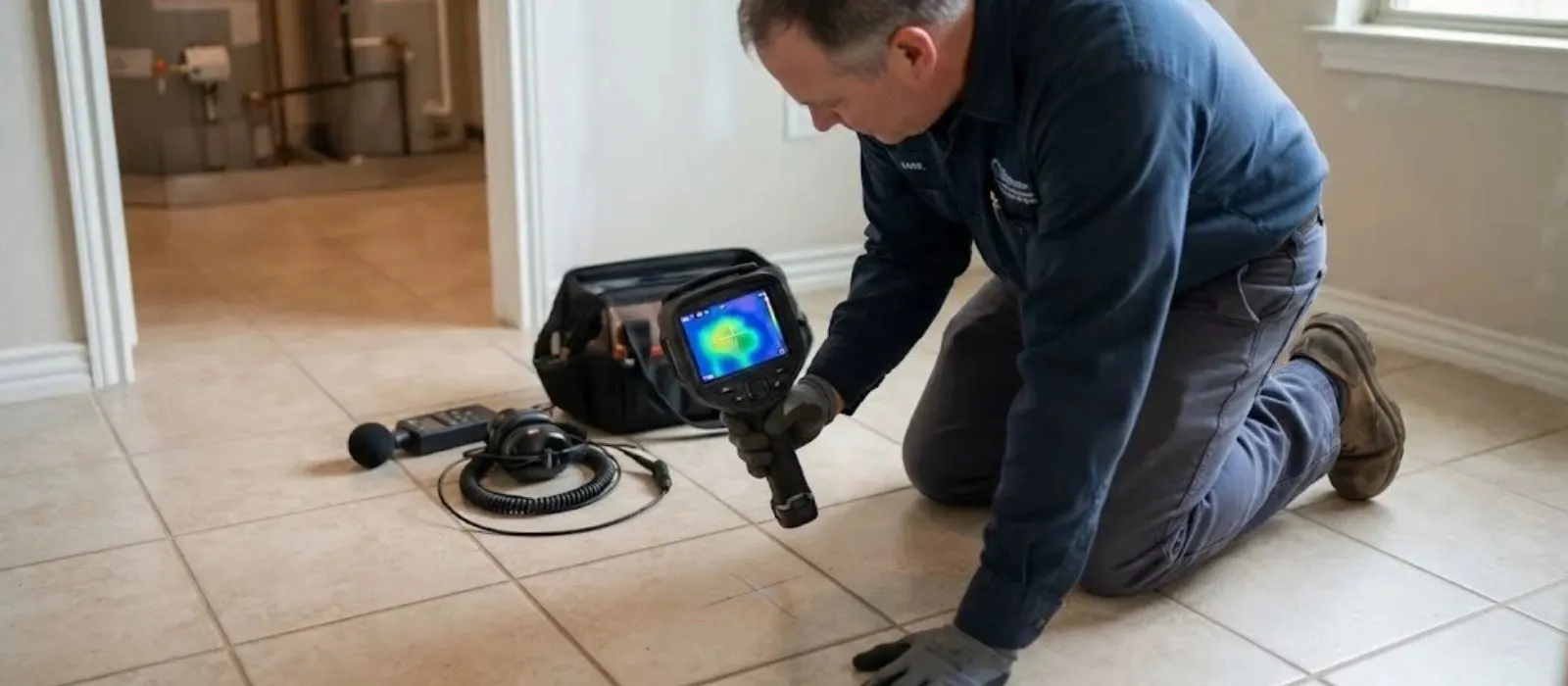
Leak detection locates the exact spot a pipe is leaking, so repairs are targeted instead of exploratory. We use acoustic listening equipment, thermal imaging and pressure testing. Each tool sees a different clue, and together they narrow the leak to a few feet.
Acoustic sensors hear the hiss of pressurized water escaping. Thermal imaging shows temperature differences from a hot water leak under a floor. Pressure tests tell us which section of line is losing water, so we know where to focus.
Start with the symptom you have
Most calls start with a clue, not the word leak. Here is how the common clues map to a cause.
Meter keeps moving
With every fixture off and the icemaker idle, a moving dial means a leak somewhere between the meter and the faucets.
High water bill
A bill that rises with no change in habits often points to a running toilet or a slow underground leak.
Warm spot on the floor
A warm patch on a slab or tile suggests a hot water line leaking under the floor.
Low water pressure
A drop in pressure with no other cause can follow a leak on the supply side.
Musty smell or stains
Damp odors and ceiling stains point to a slow leak behind a wall or above a ceiling.
Sound of running water
Hearing water when nothing is on means the line is leaking under pressure.
The detection process
The visit has a clear order so nothing is guessed.
Confirm and isolate
We read the meter, shut fixtures off and test sections of line to see where pressure is lost.
Pinpoint
Acoustic and thermal tools narrow the leak to a small zone, and we mark it.
Report and repair
You get the location, the cause and repair options with prices, then the plumber fixes it or hands you a clear report for your insurer.
Water meter and high-bill leaks
Start with the meter. Turn off every tap and appliance, then watch the dial or the small low-flow indicator for a few minutes. If it moves, water is going somewhere. If it holds still, the leak may be intermittent, such as a toilet that refills now and then.
A toilet is the most common silent leak. Drop food coloring into the tank and, without flushing, see if color shows in the bowl after fifteen minutes. If it does, the flapper is leaking, and toilet repair is a quick fix.
Outside the house, a leak between the meter and the home shows up as a wet lawn patch or a meter that runs with the house off. That is a service line problem and needs a locate before digging.
Slab, crawlspace, ceiling and buried line leaks
Slab leaks come from pipes under or inside a concrete floor. Warm spots, a sound of running water and a sudden bill increase are the clues. If your home sits over a crawlspace, a leak under the house shows up as damp insulation, a sagging subfloor or pooling soil.
Ceiling and wall leaks are traced from the wet spot upward and backward, since water travels along framing. Buried line leaks run from the meter to the house and often surface as a soft patch of lawn or a wet driveway edge. We locate the line before anyone digs.
If the leak turns out to be a failed supply line, burst pipe repair and repiping cover the fix.
Irrigation, yard and pool leaks
Sprinkler systems leak at valves and buried joints. A wet patch that appears when the system runs points to the irrigation side, not the house. A pool or spa leak is a separate system, and we say so if that is what we find.
Why hidden leaks matter in Keizer
Keizer sits on the Willamette River flood plain, and the city marks floods in 1861, 1890, 1943, 1964 and 1996 at the display at Keizer Rapids Park. Wet ground after a rainy season can mask a slow leak or fool you into blaming groundwater. A meter test tells you which it is before you dig up the yard.
The city gets its water from the Troutdale aquifer and serves homes through about 125 miles of pipe. A meter that runs with the house off is worth a call, and the City of Keizer can tell you where its side of the line ends and yours begins. Neighbors in Salem and Woodburn get the same checks.
What leak detection costs
The price depends on how hard the leak is to find. These are the factors.
What the numbers say about hidden leaks
According to the EPA WaterSense program, the average household wastes nearly 10,000 gallons of water a year to leaks. Most of that loss is quiet. A toilet flapper, a worn supply line or a small slab leak rarely announces itself until a bill or a stain does.
A basic meter test is the standard first check. Close every tap and appliance, then watch the leak indicator on the water meter. If it keeps moving, water is escaping somewhere. Pinpointing where is the job of acoustic, thermal or pressure methods, not guesswork.
Leak detection questions from Keizer homeowners
Yes. Dispatch is open 24 hours a day, every day. If water is spreading, shut the main valve and call, and a plumber is sent as soon as a crew is free.
Turn off all water use and check the meter. If the dial moves, you have a leak. A bill spike, a warm floor spot or a musty smell are other clues.
Not to find the leak. Acoustic and thermal tools locate it without opening anything. Opening is limited to the spot needed for the repair.
Yes. We combine acoustic listening, thermal imaging and pressure tests to narrow the location, then explain repair options before anyone breaks concrete.