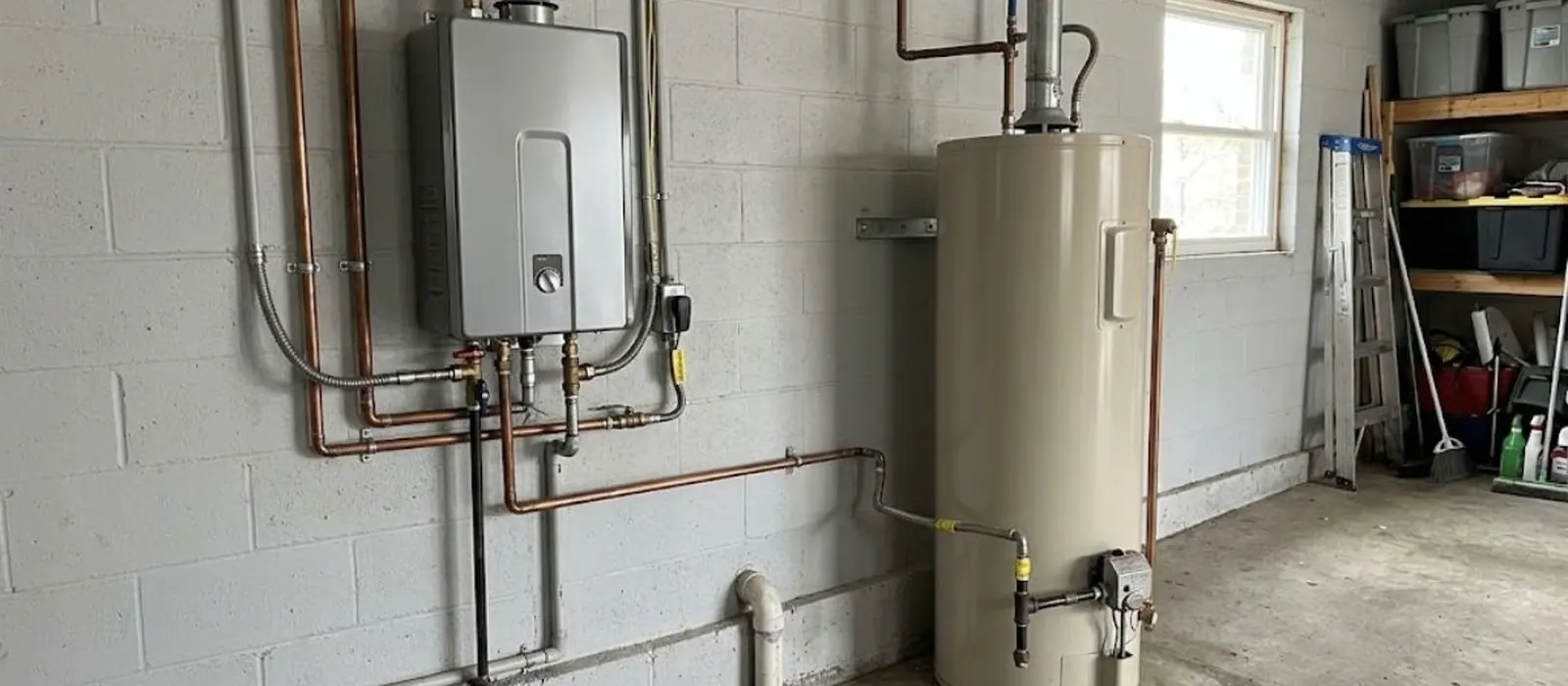
Location comes before the model
Most people pick a unit first and ask where it goes later. It works better the other way around. The place you choose decides the vent route, the gas pipe length, the clearance from walls and the distance to your showers. Pick the place first, then size the unit to suit it.
A tankless heater is wall mounted and much smaller than a tank. That freedom is useful, but a vent and a gas line must still reach it. For the basics, see tankless water heaters.
Four common locations and their trade-offs
Each location suits a different house.
Garage wall
Easy venting and gas, room for service. Hot water travels farther to the bathrooms.
Utility closet
Short runs to fixtures. Needs proper clearance, combustion air and a vent path through the roof or wall.
Exterior wall
Frees interior space. Needs an outdoor-rated unit and freeze protection.
Basement or crawlspace
Good for distribution. Access and condensate drains need planning.
Venting decides a lot
Gas tankless heaters exhaust hot gases, and the vent has to be the right material, the right slope and the right length. Condensing models use plastic vent pipe and need a drain for condensate. Non-condensing models use metal vent and run hotter.
A shorter, straighter vent costs less and works better. A location that forces a long run through the attic can add significantly to the job. That is why we measure on site before quoting.
What each placement needs
A quick reference for planning.
| Placement | Vent | Gas | Special needs |
|---|---|---|---|
| Garage | Through wall or roof | Often close to the meter | Protection from impact |
| Closet | Roof or wall route | Branch line sized for the load | Combustion air |
| Exterior | None for outdoor models | Outdoor rated connection | Freeze protection |
| Crawlspace | Through floor or wall | Longer run | Drain and access |
Your plumber confirms clearances against the manufacturer’s installation manual.
Distance to the fixtures and the wait for hot water
A tankless heater makes hot water on demand, but the water still has to travel from the heater to the tap. A long run to the far bathroom means a wait and a few gallons down the drain. A recirculation line or a small point-of-use unit can shorten the wait.
If your kitchen and master bath are at opposite ends of the house, that matters more than whether the heater sits in the garage or the closet.
Permits, code and clearances
New gas appliances need to follow the Oregon Plumbing Specialty Code and the manufacturer’s installation instructions. A gas line change or a new vent usually needs a permit and an inspection. Ask your local building office before you start.
If you are also deciding between a tank and a tankless unit, water heater installation compares them.
A walk-through: garage or closet?
Picture a 1960s ranch with the old tank in a garage corner and the bathrooms at the far end of the house. Putting the tankless unit on the garage wall keeps the gas and the vent short, but hot water has a long trip to the bathroom. Moving it to a hall closet shortens the trip, but the vent now needs a path through the roof.
Neither answer is wrong. The right one depends on what you value, a lower install cost or a shorter wait at the tap. A plumber who walks the house with you can lay out both options with real numbers, and that conversation is worth more than any general rule.
Noise, access and future service
A tankless heater makes some sound when it fires, so avoid placing it against a bedroom wall. Leave room in front for service, because the unit needs a yearly flush and the isolation valves need to be reachable.
A unit that is easy to reach is serviced more often, and a unit that is serviced lasts longer. Thinking about the person who will flush it next year is a good test of any location.
Gas line sizing and why the location matters
A tankless unit can need several times the gas of a tank. The line from the meter to the heater must be large enough to deliver it without a pressure drop. A heater far from the meter needs a longer line, and a longer line needs a larger pipe to carry the same gas.
This is why a location near the existing gas supply saves money. If a plumber tells you the gas line needs upsizing, ask to see the calculation. The manufacturer publishes sizing charts based on the length of run and the number of fittings, and a good installer works from them rather than guessing.
Questions to ask the installer about location
These keep the quote honest.
- How long is the vent run?Longer runs add cost and can limit the model you choose.
- Does the gas line need upsizing?Ask how the size was calculated.
- Where does the condensate go?Condensing units need a drain path.
- How will the unit be serviced?Valves and the filter should be reachable.
Code and manufacturer rules that decide the location
The location is set by the manufacturer’s installation instructions and the Oregon Plumbing Specialty Code, which is the state’s adoption of the Uniform Plumbing Code (UPC). Clearances, vent length, combustion air and condensate drainage all follow those documents.
Electric units are wired under the National Electrical Code (NEC). A permit and an inspection are normal for a tankless install, so ask your plumber how they handle both.
Planning for the unit you do not have yet
Many homeowners choose a location for the heater they plan to buy next year, not the one they have now. If you may add a bathroom, plan for the extra demand. If you may switch to a heat pump unit later, leave room and a drain path.
A location that works for three options is better than a location that works for one. Ask your plumber to sketch what the space would look like with each type of heater. A rough drawing on the back of an envelope is enough to show whether a closet is realistic, and it prevents a purchase that does not fit.
Take photos of the current setup before the visit. The photos help a plumber who cannot see the space plan the vent route, the gas line and the clearances before arriving, which shortens the visit.
Keizer note: permits and older houses
The City of Keizer says permits are required for alterations and additions to existing buildings, and permits go to properly licensed and bonded contractors. The Building Department is at 930 Chemawa Road NE. Permit rules vary by project, so ask whether moving a heater needs one.
Keizer houses from the 1960s and 1970s often have a garage or closet location that already has gas. Moving the heater to a new room adds gas line work. Customers in Silverton and Salem should check their city offices.
Tankless location questions
It can, if access, venting and a drain are planned. Attic units are harder to service, so plan for it.
No, but the old location already has gas, water and a vent. Moving it adds cost.
The department handles permits for alterations. Ask whether your exact project needs one at (503) 856-3440.
Outdoor units have freeze protection, but a hard freeze can still harm them. Ask the manufacturer about limits.
Condensing gas models need a path for condensate, and all models benefit from a nearby drain for flushing. Ask the installer to plan it.