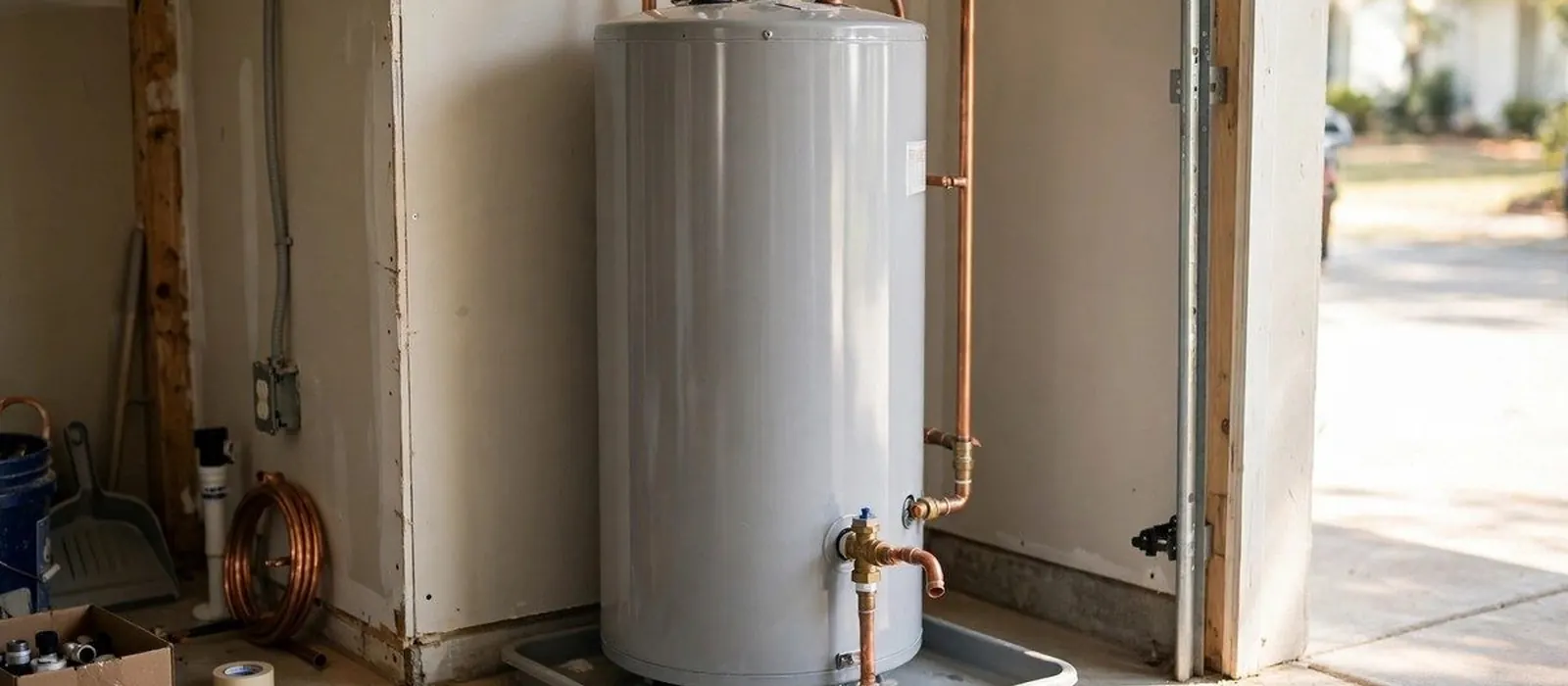
When a failed water heater becomes an emergency
A tank that leaks from its shell, rusty hot water that will not clear or a unit with a hot relief valve is a failed heater. Our 24/7 line takes the call at any hour and arranges a replacement visit as soon as a crew is free, including nights and weekends.
Shut the cold supply valve at the top of the tank, turn off the power or gas, and open one hot faucet. This limits the damage while you wait.
- Close the cold valve. It stops the tank from refilling and slows a leak.
- Kill power or gas. Use the breaker or the gas control. Never leave a dry electric element energized.
- Clear the floor. Move boxes and electronics away from the base and sop up standing water.
- Photograph the unit. A photo of the label with the model and size helps dispatch plan the replacement.
How we choose the right replacement
The right unit matches your household, your fuel and your space. Size is set by how many people use hot water at the same time, not by the size of the house. Fuel is usually the same as the old unit unless you want to change it.
Heat pump water heaters use far less electricity than a standard electric tank. Energy Trust of Oregon lists water heater incentives on its website, so check its page and your electric utility before buying. We do not promise rebates, and you should confirm eligibility first.
Clearance matters for a heat pump unit, since it needs air space and a drain for condensate. We check the closet or garage before recommending one.
Tank, heat pump and tankless: a quick comparison
Each type suits a different home and budget.
| Type | Best for | Trade-off |
|---|---|---|
| Standard gas or electric tank | Most homes, simple swap | Always heating a full tank, so some standby loss |
| Heat pump (hybrid) tank | Homes with open space and high hot water use | Higher purchase price, needs clearance and a drain |
| Tankless | Small households and tight spaces | Larger install, needs venting and yearly flush, see tankless water heaters |
Planned installs follow the same steps as water heater installation.
The replacement day, step by step
A standard swap takes a few hours when the space is clear.
Drain and disconnect
We shut off supply, drain the old tank, disconnect gas or power and remove the old unit.
Set the new unit
The new heater is set, connected with new flexible connectors, vented if gas and fitted with a new relief valve discharge line.
Fill, test, explain
We purge air, check for leaks, light or energize the unit, set the temperature and show you the shutoffs.
What goes with a good installation
A replacement is more than a new tank. These items protect it.
- Expansion tankClosed plumbing systems need a thermal expansion tank to absorb pressure as water heats.
- Relief valve and discharge pipeThe relief valve opens before pressure gets dangerous, and the pipe must run to a safe place.
- Seismic strappingOregon sits in an earthquake region, so ask whether your tank should be strapped to the wall.
- Gas and venting checksOn gas units we confirm the venting and combustion air before we leave.
Replacing a heater in a Keizer home
Keizer houses built in the 1960s and 1970s often have the heater in a garage or a closet beside the kitchen. Those spots tend to have enough room to swap a like-for-like unit without moving anything, which keeps the job short.
The City of Keizer Building Department is at 930 Chemawa Road NE, and the city says permits are required for plumbing alterations and are issued to properly licensed and bonded contractors. Permit rules vary by project, so ask the Keizer Building Department whether yours needs one. We handle the paperwork when it does.
What decides the price of a replacement
Get a clear price before work starts. These are the factors in it.
Repair or replace: the honest answer
If your heater is leaking from the shell, there is no repair that lasts, so replace it. If it simply lost heat and the tank is sound, water heater repair may save money. Ask for both numbers and decide with the facts in front of you.
Code points that shape a replacement
A replacement has to meet the Oregon Plumbing Specialty Code, which is the state’s adoption of the Uniform Plumbing Code (UPC). In practice that means a relief valve with a proper discharge pipe, correct venting for gas units, and thermal expansion control when the home’s water system is closed to the street.
The manufacturer’s installation instructions set clearances, venting and fuel connections, and they take priority over habit. Ask your plumber to name the permit and inspection steps for your address before the old tank comes out.
Water heater replacement questions from Keizer homeowners
Yes. Dispatch is open 24 hours a day, every day. If the tank has failed, we shut it down safely and set a replacement visit as soon as a crew is free.
A standard tank swap takes a few hours. Moving to a new fuel type, adding venting or changing to a heat pump takes longer, and the plumber tells you before starting.
Permit rules vary, so ask the Keizer Building Department at (503) 856-3440. When a permit is needed, we pull it and schedule the inspection.
Energy Trust of Oregon lists water heater incentives on its site. Eligibility depends on your utility and the unit, so confirm before you buy.