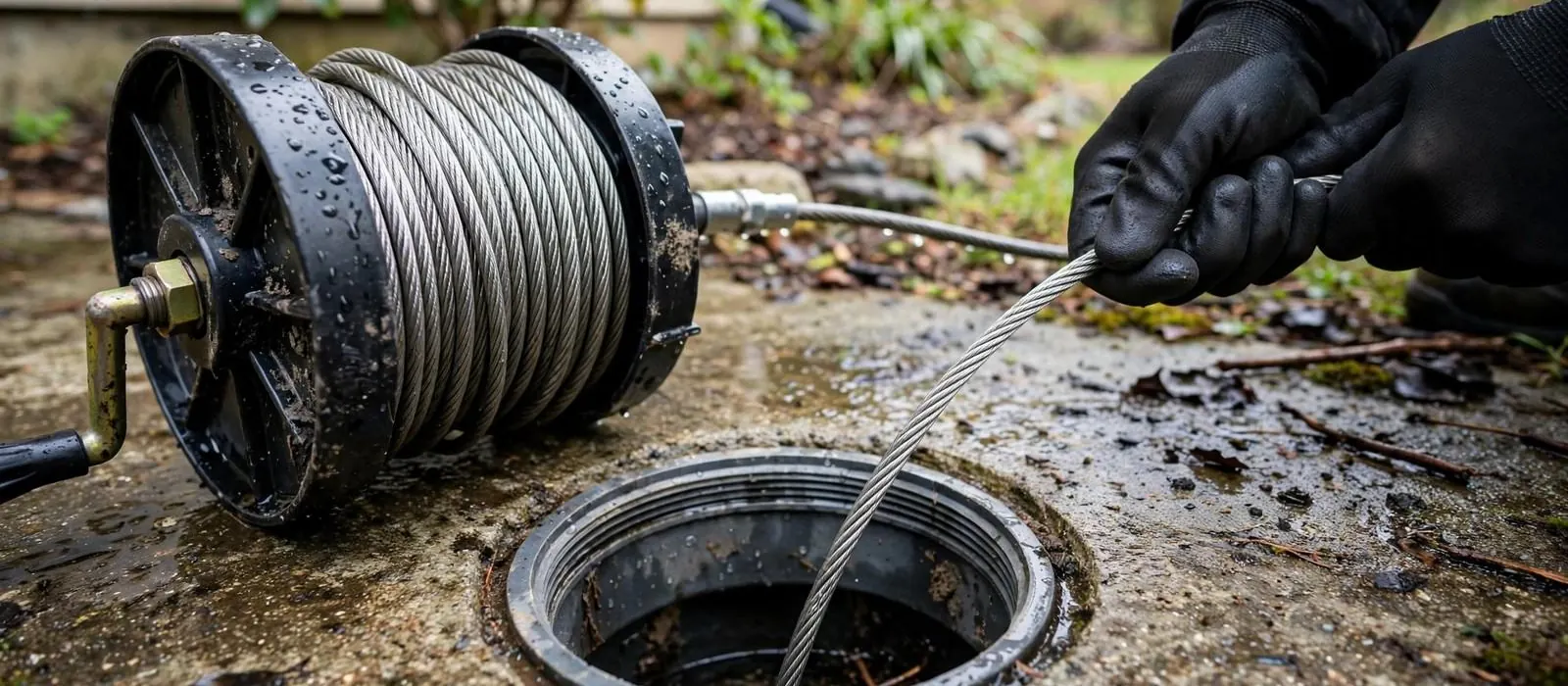
How to tell it is the main line
A single slow sink is a branch problem. When the tub, the toilet and the washer drain all slow down together, the clog sits in the main sewer line. The lowest drain in the house, often a basement floor drain or a first-floor tub, shows it first.
Another clue is gurgling. When a toilet flush makes the tub bubble, air is being pushed back through the system because water cannot move forward.
Common causes of main line clogs
Knowing the cause helps pick the tool.
Roots
Fine roots enter through joints and catch paper, forming a net.
Grease
It coats the pipe wall and narrows it over time.
Flushed wipes
They do not break down and snag in the line.
A sagging pipe
Water and solids settle in the low spot.
What is safe to try
You can stop adding water. Skip laundry and long showers. If your cleanout is accessible and the line is not full, a plumber’s hand auger can sometimes help, but a main line is deeper and longer than most home tools reach.
Skip chemical cleaners. They rarely clear a full main, and the liquid then sits in the pipe where it harms anyone who opens the line afterward.
What a plumber does
The sequence is the same for most main line calls.
Open the cleanout
The cap is removed with care, because a full line can push sewage out.
Camera
A camera shows the pipe condition and whether the clog will come back.
Cable or jet
Each tool has a purpose.
| Clog type | Best tool | Reason |
|---|---|---|
| Soft debris and paper | Cable machine | Fast and low cost |
| Grease and scale | Hydro jet | Cleans the whole pipe wall |
| Roots | Cutter, then jet | Cut the mass, then clear the wall |
| Repeat clogs | Camera first | Find the cause before cleaning again |
See hydro jetting for what the jet does.
Preventing the next one
Keep wipes, paper towels and grease out of the drains. Know where your cleanout is. If the line has clogged twice in a year, ask for a camera inspection. That is cheaper than a third backup and an insurance claim.
A worked example: the tub gurgles when the washer drains
A homeowner notices the tub gurgle every time the washing machine empties. The toilet then bubbles. Each symptom alone could be a branch clog, but the combination points to the main line, because the washer drains into the same line that serves the tub and toilet.
The plumber confirms by running water at several fixtures and watching the cleanout. If the cleanout fills, the blockage is downstream. That test costs nothing and narrows the problem to one pipe, which is exactly what a main line clog looks like.
While you wait for the plumber
A few steps limit the damage and speed the visit.
- Stop using waterNo flushing, no laundry and no dishwasher.
- Protect the floorLift rugs near the lowest drain and place towels.
- Clear the path to the cleanoutMove planters, bins or snow away from the cap.
- Note what happened firstTell the plumber which fixture slowed down before the others.
Why main line clogs return
A main line that has been cleaned can clog again within months if the cause was never fixed. Roots grow back from the joints they entered. Grease and scale reform on the pipe wall. A belly continues to hold water and solids.
That is why a camera look is worth the time after a cleaning. It shows whether the line is simply dirty or whether it has a defect that cleaning will not solve. If the pipe is fine, a regular cleaning schedule works. If the pipe has a defect, the money is better spent on a repair than on repeated cleaning.
A simple decision guide
Match what you see to the next step.
First clog in years, clean pipe on camera
Clean and monitor. No repair needed.
Roots at joints
Cut and jet now, and plan a joint repair or lining.
A belly holding water
Cleaning is a stopgap. Discuss regrading the section.
Cracks or a collapse
Move to sewer line repair.
What the repair history of your house can tell you
Think back over the past few years. Has the line backed up before? Did a plumber mention roots, grease or a low spot? Was a tree removed, or a driveway poured, or a fence post set near the line? Each answer narrows the likely cause.
Keep a short log for the house. Dates of clogs, the work done and the findings on camera make the next visit faster. A plumber who sees that the line was jetted a year ago and roots returned knows to talk about a repair, not a third cleaning.
If you rent, tell the owner about every backup. A repeat problem is a maintenance issue that the owner should address, and the written history protects you if the situation worsens. Keep photos and dates with the log.
Keizer note: lots with mature trees
Keizer grew from farmland and orchards into subdivisions between the 1950s and the 1970s, according to the city, and trees planted since then now stand over old sewer laterals. Roots are a frequent cause of main line clogs here, and the Claggett Creek area is one where creekside trees run large.
If you are in Woodburn or Salem, the same warning signs apply, and each city has its own sewer rules. Ask your city where its responsibility ends and yours begins.
Clogged sewer line questions
Rarely. A main line is long and deep. A rented machine can injure you or damage the pipe. A plumber has the right tools.
Yes. It is a health risk and it spreads fast. Stop water use and call the 24/7 line.
Usually a capped pipe outside near the foundation. If you cannot find it, tell the plumber.
Ask the City of Keizer where its responsibility ends and yours begins. It decides who pays for which section.
Most cleanings take one to two hours once the plumber has access. A camera pass afterward adds time but shows whether the line is clear and sound.