Start with the obvious: did only hot water drop?
Open a cold tap and a hot tap at the same sink. If cold is strong and hot is weak, the problem is on the hot side and likely at or after the heater. If both are weak, look at the main valve, the pressure reducing valve or the service line.
This single test saves a lot of guesswork. It separates a heater issue from a whole house issue in about one minute.
Causes at the heater
These are the most common.
Partly closed isolation valve
A shutoff valve not fully opened after the install restricts flow.
Clogged inlet or filter screen
Debris stirred by the shutoff clogs screens at the heater or at faucets.
Kinked flexible connector
A bent supply line can pinch the flow.
Trapped air
Air in the lines causes spitting and uneven flow until purged.
Expansion tank issue
A waterlogged tank can cause pressure swings.
How to check them
These checks are safe for a homeowner.
Open the valves fully
Check that the cold inlet and hot outlet valves at the heater are fully open.
Clean the aerators
Unscrew the faucet aerators and rinse out debris.
Purge air
Open the hot taps in the house and let them run until the flow is steady.
Whole house causes
If the whole house is weak, look here next.
| Cause | Sign | Fix |
|---|---|---|
| Main valve not fully open | Weak flow everywhere | Open it fully |
| Pressure reducing valve failing | Pressure drifts or drops | Test and replace the valve |
| Corroded supply pipe | Gradual drop, rusty water | Consider repiping |
| Service line leak | Meter runs with taps off | Leak detection |
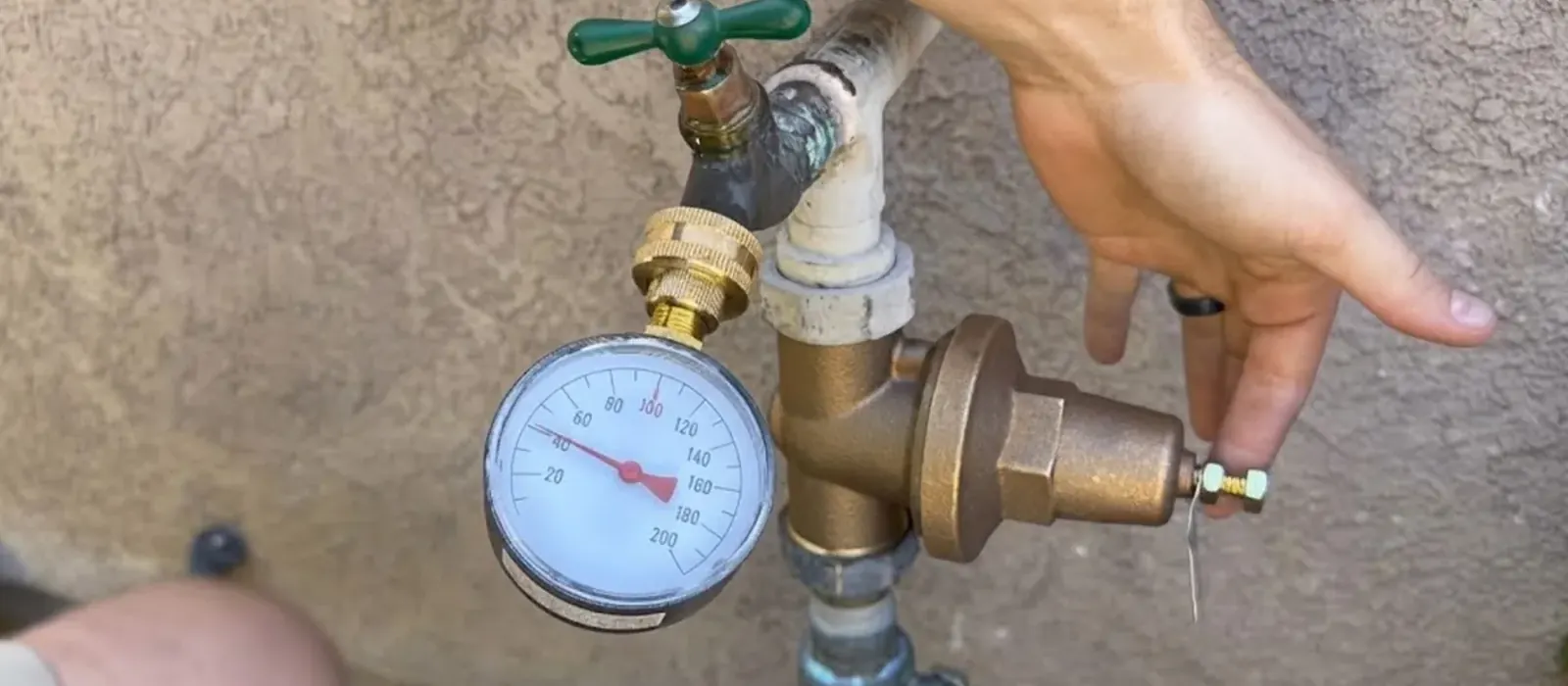
Gauge-test the pressure at a hose bib to know the real number.
Why a replacement can stir up trouble
Shutting the water off and draining lines moves sediment and scale that had been sitting still. That debris goes to the nearest screen. If the pipes are old galvanized steel, a shutoff can also dislodge rust flakes that clog fixtures downstream.
It is also possible the new heater is the right size but the old plumbing around it cannot flow as much as it should. A plumber checks the pipe size and the connections.
When to call the plumber who did the install
If pressure is wrong right after an install, call the installer first. Many fixes are simple and covered by the original job. If you hired another plumber, water heater repair can diagnose it.
Pressure facts worth knowing
Normal home pressure falls in a moderate range, and a gauge at a hose bib tells you the real number. Very high pressure strains fittings, and very low pressure suggests restriction or supply trouble. A pressure reducing valve and an expansion tank protect a water heater system when set correctly.
The pressure gauge test, step by step
A pressure gauge screws onto a hose bib and costs little at a hardware store. Close the valves inside the house, attach the gauge, open the bib and read the number. Then open a few taps inside and see how far the reading drops.
A steady reading that drops sharply when taps open points to a restriction or a supply problem. A low reading with nothing running points to the supply side or the pressure reducing valve. Writing down the numbers gives the plumber a head start.
A worked example: hot weak, cold strong
After a new heater goes in, the cold tap at the kitchen sink runs strong but the hot dribbles. The shower is weak too. The pattern points to the hot side only.
The installer finds the hot outlet valve open halfway and a clogged screen at the faucet aerators, loosened by the shutdown. Opening the valve fully and cleaning the aerators fixes the flow. That is the most common ending, and it takes minutes once someone knows where to look.
Pressure reducing valves and expansion tanks
Many homes have a pressure reducing valve near the main, which keeps house pressure in a safe range. When the heater is replaced and the water is shut off, a valve that was already tired can fail to reset properly. Low or unstable pressure after a plumbing job is a sign to test it.
An expansion tank near the heater absorbs the pressure created when water heats. If it is waterlogged, pressure swings. A tank that has lost its air charge can be recharged or replaced. These parts are small, but together they decide how steady your water feels at the tap.
What the plumber will check
In order, from simplest to most involved.
The valves at the heater
Fully open and in good condition.
The aerators and shower heads
Cleaned and flowing.
The pressure at a hose bib
Measured with a gauge.
The reducing valve and expansion tank
Tested for proper pressure and charge.
Code points that can affect pressure after an install
Water heater installs must meet the Oregon Plumbing Specialty Code, which is the state’s adoption of the Uniform Plumbing Code (UPC) and the manufacturer’s instructions. Valves, expansion tanks and supply connections are all part of that, and any of them can reduce flow if partly closed or fitted wrong.
If pressure dropped right after a new heater went in, ask the installer to check the isolation valves first, then the connectors and any pressure-related devices. These are standard checks before any pipe work.
When the problem was already there
Sometimes the new heater only reveals a problem that was hiding. Old galvanized pipes narrow slowly, and you adapt to the weaker flow without noticing. A heater replacement requires a shutoff, and the disturbance can clear one restriction and create another, which draws your attention to the real issue.
If the pressure was never great, a gauge reading and a flow test tell you how the house compares to a healthy system. A reading in the normal range with weak flow points to narrow pipes. A low reading points to the supply side. Each leads to a different fix.
Ask the plumber to put the numbers in writing. A pressure and flow record before and after the work is useful if the problem returns, and it helps you decide whether a larger project, such as repiping, is justified.
Keizer note: where permits and codes come in
The City of Keizer Building Department at (503) 856-3440 handles permit questions for water heater replacements. Permit rules vary by project. A permitted job includes an inspection that can catch valve and connection issues.
Oregon plumbers work under the Oregon Plumbing Specialty Code, and you can verify any plumber with the Building Codes Division license search. For installs in Woodburn or Salem, the local permit office differs.
Low pressure questions
No. Brief spitting from air is normal. Lasting weak flow is not, and it should be fixed.
Yes, and it can also cause high pressure spikes. A gauge test tells you.
It should not. The heater is part of the path, but not the source.
Call the installer first, or the 24/7 line if you need another plumber.
Brief spitting from trapped air clears in minutes. Weak flow that lasts a day or more needs a check.