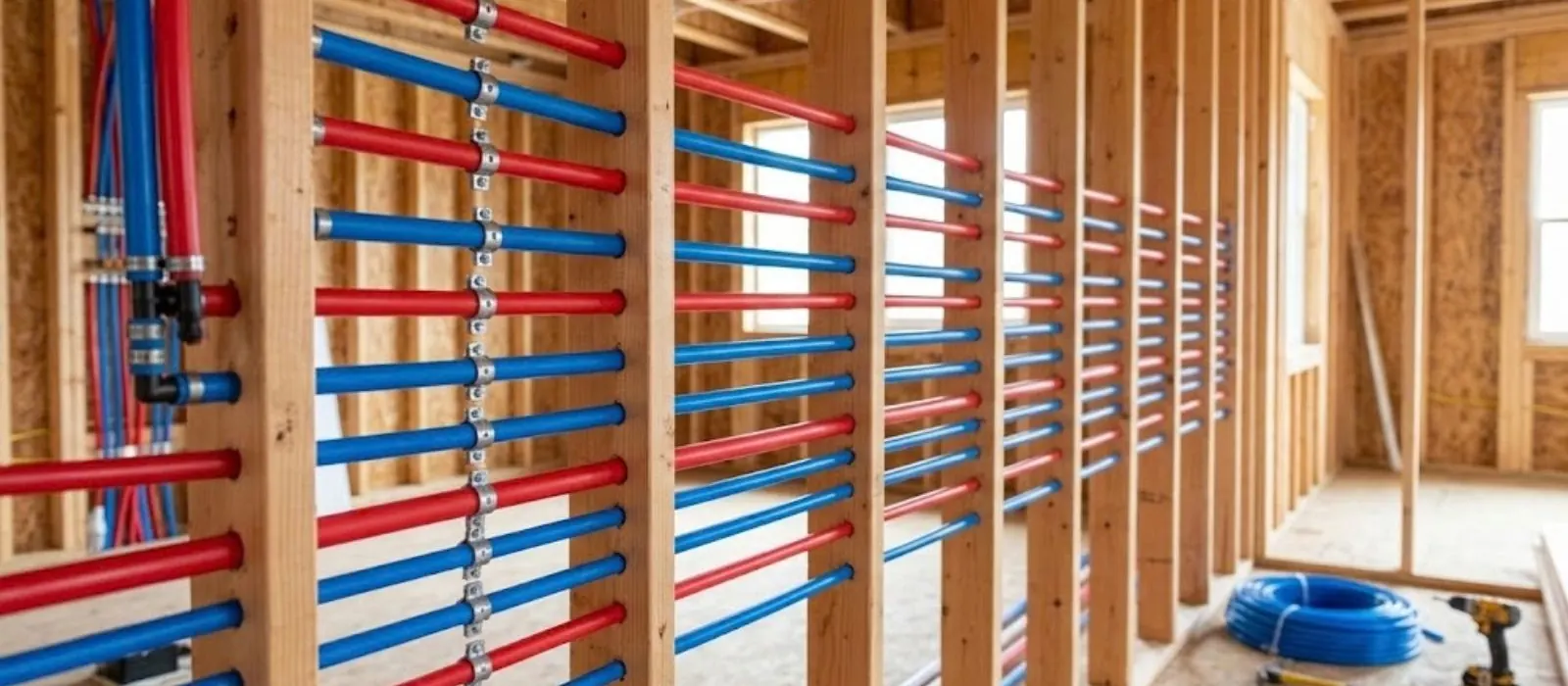
What repiping means
Repiping replaces the water supply pipes in a home, either the whole system or a major section. The new pipe is typically PEX or copper. It does not mean replacing drains, which are a separate system.
A repipe is a planned project. If a pipe has burst, burst pipe repair stops the damage first, and a repipe may follow if the rest of the system is failing.
Signs it is time to repipe
One leak is a repair. A pattern is a reason to replace.
Repeated leaks
A second or third leak in a short time on the same system means more are coming.
Rusty or brown water
Galvanized steel corrodes from the inside and sheds rust.
Low water pressure
Corrosion narrows old pipes and chokes flow at the fixtures.
Pinhole leaks in copper
Small leaks in several places suggest the pipe wall is thinning.
Older polybutylene pipe
This gray plastic used in some homes in the late 1970s through the mid 1990s is known to fail.
PEX, copper or something else
The material changes cost, speed and feel.
| Material | Pros | Trade-offs |
|---|---|---|
| PEX | Flexible, fast to install, fewer joints, resists freeze splitting | Needs UV protection, fittings differ by system |
| Copper | Long record, strong, fire resistant | Higher material cost, more joints, can pinhole in some water |
| CPVC | Lower cost, rigid | Can be brittle with age and heat |
We recommend the material that suits your house, then explain the choice.
How a repipe runs
We plan to limit the mess.
Plan the routes
We walk the house, mark the new pipe routes and plan access points in walls, attics and crawlspaces.
Replace
We shut off water, install the new lines and fixtures connections, and keep a temporary water plan for the day.
Test and patch
We pressure test, restore water, and patch the small access openings or leave them ready for your drywall repair.
Water service lines and pressure problems
The service line runs from the meter to the house. If it leaks or corrodes, pressure falls and water use rises. A service line is a separate project from the interior repipe, and we look at both together when pressure is the symptom.
Low pressure has other causes too, such as a failing pressure regulator or a partly closed valve. We test pressure at the hose bib first, so we repair the right thing. If a meter runs with the house off, start with leak detection.
Permits and planning
The City of Keizer lists plumbing among the work that needs a permit for alterations to existing buildings, and permits are issued to properly licensed and bonded contractors. The Building Department is at 930 Chemawa Road NE and the number is (503) 856-3440. We pull the permit and schedule the inspection for the project.
Ask us about timing. A whole-house repipe usually means a day or two without normal water use, and we plan the sequence so the water is back on each evening when possible.
Repiping Keizer homes
The City of Keizer reports its growth peaked from the 1950s to the 1970s. Homes of those eras can have galvanized steel supply lines, and homes from the late 1970s through the mid 1990s can have polybutylene. A quick look at the pipe near the water heater tells us what you have.
The city draws water from the Troutdale aquifer and publishes an annual report. Ask for it if you want to learn about your supply before choosing a pipe material. We also repipe homes in Salem, Woodburn and Silverton, where the supply differs.
What a repipe costs
A repipe is a major project, so we quote it after a walk-through. These are the factors.
Codes and materials for a whole-house repipe
A repipe is regulated work. The materials, joints, support spacing and water pressure limits come from the Oregon Plumbing Specialty Code, which is the state’s adoption of the Uniform Plumbing Code (UPC), and a permit with inspections is the normal path. Pipe makers also publish installation instructions that must be followed for the warranty to mean anything.
Ask your plumber which pipe material will be used and why, who pulls the permit and when inspections happen. Verify the license through the Oregon Building Codes Division license search before you sign.
Safety checklist before and during a repipe
A repipe puts crews in your walls for days. These steps keep the house safe.
- Know your main shutoffFind and test it before the crew arrives.
- Plan for water offFill containers for drinking and flushing, and plan showers elsewhere on the long days.
- Protect the work areaClear furniture away from walls, cover floors and keep children and pets out of rooms where walls are open.
- Do not use unfinished linesDo not turn on fixtures the plumber has not cleared for use.
- Watch for dust and noiseClose doors, run fans if advised and ask about breaks for anyone with breathing problems.
- Check the inspectionDo not allow walls to be closed until the inspector has passed the pipes.
Repiping questions from Keizer homeowners
It is gray, threaded and attracts a magnet. Brown stains at joints and weak pressure are common signs.
Usually one to a few days depending on size and access. We plan it so you have water most evenings.
Alterations to existing plumbing need a permit in Keizer. Ask the Keizer Building Department at (503) 856-3440, and we handle the paperwork.
We keep openings small and plan routes to limit damage. Some access holes are needed, and we leave them ready for repair.