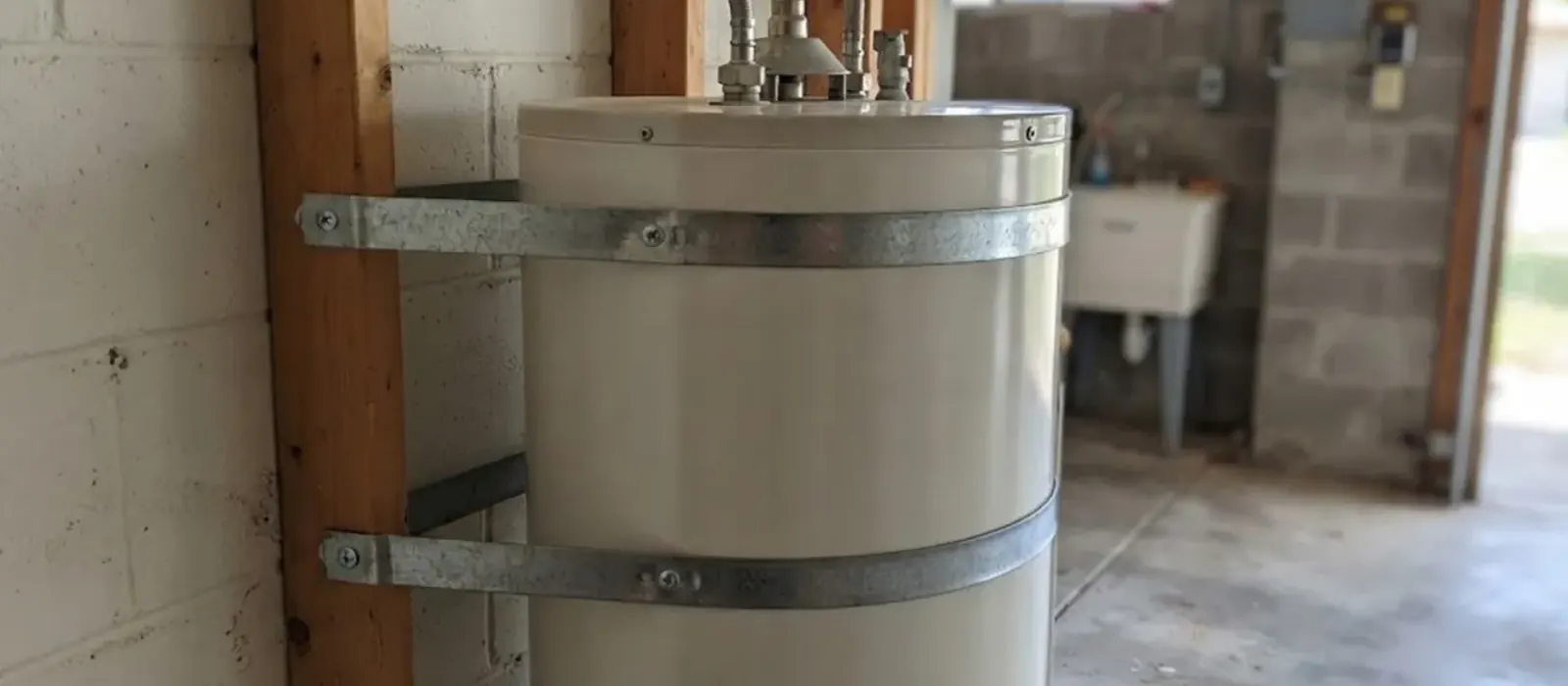
Why one number does not fit every house
Ask five people what they paid for a new water heater and you will hear five answers. The unit type, the fuel, the location and the work around it all change the total. A like-for-like swap in an open garage is the low end. A fuel conversion in a tight closet is the high end.
Rather than quote a figure that may not fit you, this guide lists what moves the price so you can read a quote line by line.
The main cost drivers
Check each one against your quote.
| Factor | Raises cost when | Ask the plumber |
|---|---|---|
| Unit type | Heat pump or tankless instead of a standard tank | Why this type for my house? |
| Capacity | Larger tank or higher output | What size do I need? |
| Fuel and venting | Changing fuel or running a new vent | Is the existing vent usable? |
| Code items | Expansion tank, strapping, discharge line | Which are required? |
| Access | Attic, crawlspace or a tight closet | How is access affecting time? |
| Permit | Where a permit and inspection apply | Who pulls it? |
A clear price before work starts is the standard we follow. See water heater replacement.
Line items that surprise people
These often appear on a quote.
Haul away and disposal
Removing the old tank has a cost.
New flexible connectors and valves
Old ones should not be reused.
Gas line or electrical work
Needed when sizes or fuels change.
Expansion tank
Required in many closed systems.
Emergency versus planned
A midnight replacement carries an after-hours rate. If the old tank is only starting to fail, a planned visit during normal hours costs less and lets you choose the unit. When you can plan, water heater installation is the better path.
If the tank is already leaking, safety comes first. Shut it off and call. The plumber explains the price before work begins.
Incentives and what to check
Energy Trust of Oregon lists water heating incentives on its website. Eligibility depends on the unit and your utility. Check before you buy, because an incentive can change which unit pays off. We do not promise any rebate.
How to compare two quotes
Make the quotes equal before you compare totals.
- Same unitCompare make, size and type.
- Same scopeCheck that both include venting, strapping, the expansion tank and haul away.
- PermitConfirm who pulls it and who pays.
- WarrantyAsk about the unit and the labor.
- TimelineA lower price with a long wait may cost you hot water.
Two kinds of replacement, described in words
The simplest job is a standard tank swapped for a same-size tank in the same spot with the same fuel. The vent, the gas line and the water connections already fit, so the work is mostly removal and setup. It sits at the low end of the range.
The hardest job moves from a gas tank in a closet to a heat pump or tankless unit in a new location. It needs new venting or a new circuit, perhaps a gas line change and often a permit. It sits at the high end. Most jobs land between the two, and the line items in the quote tell you which kind you have.
Questions that expose hidden costs
Ask these before you accept a quote.
- Does the price include a permit?And who pulls it?
- Is the expansion tank included?Many closed systems require one.
- What happens if the vent needs work?Get a written price for surprises.
- Is haul away included?Disposal should not be an extra surprise.
Why the cheapest unit is not always the cheapest choice
A basic tank costs the least to buy. A more efficient tank or a heat pump unit costs more now and less to run. Whether the higher price pays back depends on how much hot water you use, how long you expect to stay and what your utility charges.
A fair comparison counts both the purchase and the running cost over several years. Ask your plumber for a simple estimate of each, and ask what assumptions it makes. If the plumber cannot explain the numbers, treat the estimate with caution.
Ways to keep the cost in check
Practical moves that do not sacrifice quality.
Plan ahead
A booked visit costs less than an emergency call.
Reuse good existing infrastructure
Keep the same fuel and location where it makes sense.
Check incentives
Confirm eligibility before you buy a qualifying unit.
Keep the warranty paperwork
It matters when something goes wrong.
What a good quote looks like
A good quote is written, itemized and specific. It names the unit by make, model and size. It lists the work: removal, installation, venting, connectors, valves, expansion tank, strapping, permit and disposal. It states the warranty on the unit and the labor, and it says how long the offer stands.
A quote that says only a single total is hard to compare. Ask for the breakdown, and ask what is not included. If a plumber is unwilling to explain a line, that is a warning sign. A clear price before work starts is the standard, and it protects both sides.
Be careful with offers that depend on a decision today. A tank that has not failed yet can wait a few days while you compare. A tank that has failed needs fast action, but you can still ask for a written price before the work starts.
Keizer note: permits and who to ask
The City of Keizer says permits are required for alterations and additions to existing buildings, and are issued to properly licensed and bonded contractors. The Building Department is at 930 Chemawa Road NE, phone (503) 856-3440. Ask whether your swap needs a permit, since it affects the total.
Woodburn routes plumbing permits to Marion County, and Silverton handles them in its own building department. See Woodburn and Silverton for the offices, or Salem for its online portal.
Cost questions
Not if it leaves out code items or the permit. Compare scope first, then price.
Usually a bit more for the unit, and sometimes more labor if space is tight.
It depends on your use, your electricity price and incentives. Ask for an honest estimate.
Permit fees depend on the office and the job. Your quote should show them.
If the tank is old and shows signs of wear, a planned replacement costs less and goes smoother than an emergency one. Ask a plumber to assess it.