What plumbing installation covers
Plumbing installation is the planned work of adding or moving plumbing, as opposed to repairing it. That includes new sinks, toilets, showers and tubs, laundry hookups, water lines to a new room and drain changes for a remodel.
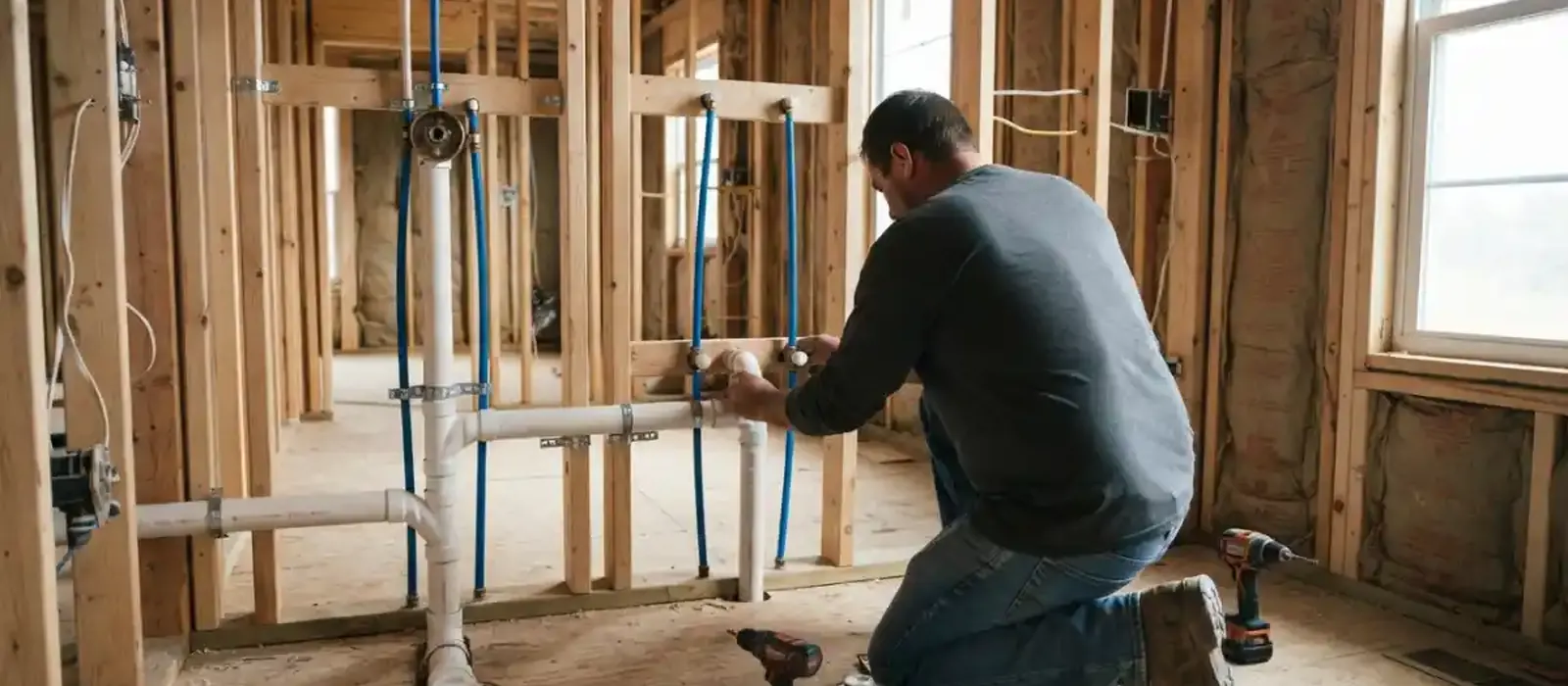
It also includes rough-in work in a new addition, where pipes go in before the walls close. We coordinate with your contractor so the plumbing is in place and inspected before drywall.
Common installation projects
These are the jobs we are asked about most.
Kitchen remodels
Moving a sink, adding a dishwasher line or a pot filler, and installing a disposal.
Bathroom remodels
New vanity, tub or shower valve, relocated toilet or an added bath.
Laundry hookups
Washer box, drain and shutoff for a new laundry area.
Water lines and hose bibs
New outdoor spigots, or lines to an outbuilding or garage.
Fixture swaps
Replacing a sink, faucet or toilet with a new model.
How an installation project runs
We plan before we cut.
Plan and quote
We review plans or walk the space, choose pipe routes and give a clear price.
Rough-in
We install supply and drain lines, test them under pressure and schedule any inspection.
Trim out
After walls and finishes, we set fixtures, connect them and test every one.
Rough-in versus trim
Plumbing happens in two phases.
| Phase | What happens | Who it affects |
|---|---|---|
| Rough-in | Pipes go in walls and floors before they close | Framers and drywall crew |
| Inspection | Building inspector checks the rough work | Everyone on the schedule |
| Trim out | Fixtures and faucets are set and connected | You, at the end of the project |
Rough-in timing is the part most likely to hold up a remodel, so tell us your schedule early.
What a good installation includes
These details are easy to skip and costly to fix later.
- Shutoff valvesEvery fixture gets its own stop so you can fix one without shutting off the house.
- Proper ventingDrains need vents so they flow and traps keep their seals.
- Pressure testNew lines are tested before walls close.
- Labeled shutoffsWe show you the main and branch valves.
- Water hammer controlQuick-closing valves can need arrestors to prevent knocking.
Permits and licensed work
New plumbing usually needs a permit. The City of Keizer says permits are required for new construction and alterations and additions, and are issued to properly licensed and bonded contractors. The Building Department is at 930 Chemawa Road NE and the phone is (503) 856-3440.
Oregon requires plumbers to be licensed by the Building Codes Division, and the Construction Contractors Board also requires a license. You can check both online before you hire anyone. We follow the Oregon Plumbing Specialty Code for all new work. If you are also replacing a heater, see water heater installation.
Planning a project in Keizer
Keizer homes were mostly built between the 1950s and 1970s, and many have been remodeled since. A kitchen or bath remodel often uncovers old supply lines, so build room into the schedule. If the old lines are galvanized, repiping at the same time can save a second opening of the walls.
Projects in Silverton go through the Silverton building department, and the city lists online applications for plumbing. Woodburn works differently, as Marion County issues plumbing permits there, so we confirm the right office for your address.
What installation costs
A clear price comes before work starts. These are the factors.
Code points behind new plumbing work
New fixtures, drains and supply lines must meet the Oregon Plumbing Specialty Code, which is the state’s adoption of the Uniform Plumbing Code (UPC). The code sizes pipes by fixture units, requires traps and vents on drains and lists approved materials for water and waste lines.
A permit and an inspection are normal for new work, and the inspector checks what will be hidden behind walls before they close. Ask your plumber to name the inspection steps and the pipe materials before work begins.
Plumbing installation questions from Keizer homeowners
Yes. We coordinate rough-in timing and inspections with your general contractor.
Yes. We check that they fit and meet code, and we install them.
Permit rules vary by project. Ask the Keizer Building Department at (503) 856-3440.
Yes. We plan the supply and drain routes, vent the system, pull the permit and schedule inspections.